
A hernia usually starts as a soft lump in the groin or belly that pokes out when you stand, cough or strain and goes quiet when you lie down. Some people feel an ache or a dragging pull there before they ever spot anything, mostly after carrying something heavy or being on their feet all day. Not every hernia shows a lump, though. A hiatal one can pass for plain acidity, with heartburn and food that feels stuck on the way down. They don’t mend by themselves, so a new bulge needs a proper check, and sudden bad pain with vomiting means the emergency room, not waiting till morning.
According to Dr. Shashank Agrawal, Gastroenterologist in Ghaziabad, “A small hernia that doesn’t hurt can still get trapped within hours, and I’d much rather see the bulge early than operate on it as an emergency.”
How Does a Hernia Show Up in Daily Life?
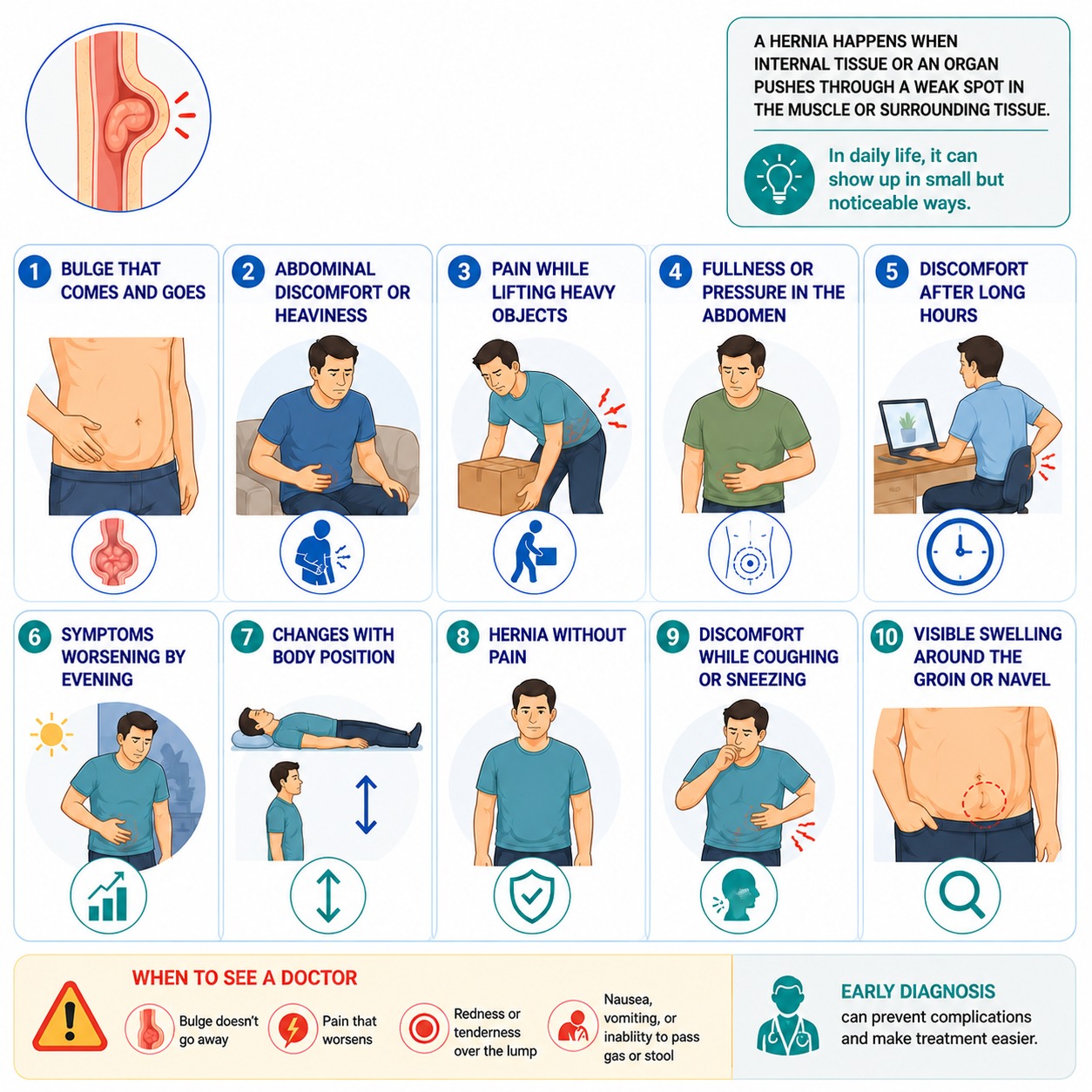
Hernias happen where the muscle wall is thin or weak, and what pushes tissue through is usually pressure from inside the belly.
- Visible Bulge: Look near the groin, the navel or an old surgical scar, because that’s where the swelling likes to appear, popping out on a cough and sliding back once you’re flat.
- Dragging Ache: It’s the kind of pain that creeps up by evening, worse after bending or lifting and easier once you sit.
- Odd Pressure: Some folks only notice a burning or heavy tug at the spot, weeks before any lump is clear enough to point at.
- Reflux Signs: A hiatal hernia lets part of the stomach slip above the diaphragm, which is why the clues are heartburn and a sticky swallow with nothing visible at all.
Easy to brush off, really. The ache fades overnight and shows up again by evening, so people blame a pulled muscle for weeks.
Each hernia type and its repair options are covered under hernia surgery.
What Determines the Right Treatment Approach?
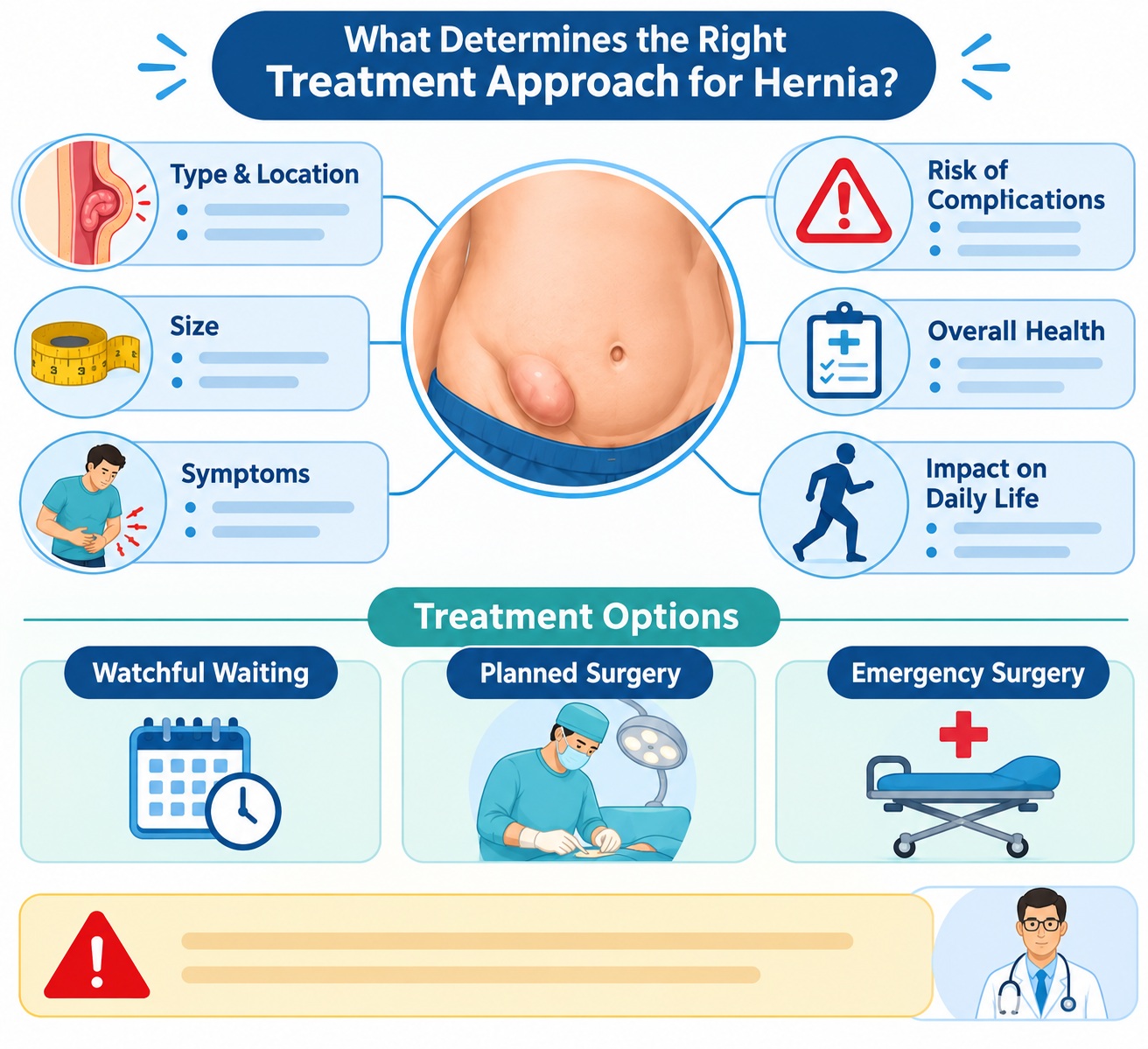
But size alone doesn’t settle it, because surgeons also weigh the type, the spot and how the hernia behaves.
- Hernia Type: Groin, navel, old-scar and hiatal hernias each get planned differently, and if a hiatal one keeps burning, acid reflux treatment may go hand in hand with the repair.
- Size and Site: A pinhole defect isn’t handled like a wide gap in a stretched scar.
- Symptoms: A bulge that stays out, pain that won’t let up or any hint of trapped tissue changes the plan fast.
- Overall Health: Diabetes, smoking, heart or lung trouble, age and earlier belly surgeries all affect when and how to operate, and some of those need settling first.
Nearly all hernias end up needing surgery, often with a mesh and sometimes through keyhole incisions if the anatomy allows.
If you’re wondering about recovery, there’s a separate read on advanced laparoscopic surgery versus open repair.
Get personalised dietary guidance to manage pancreatitis and support better digestive health.
Frequently Asked Questions
Will a hernia go away on its own?
No, it won’t, even when the lump seems to disappear for days.
Does every hernia hurt?
Not at all, plenty only show a lump or a mild pulling feeling.
When does a hernia turn into an emergency?
When pain hits suddenly, vomiting starts or the lump turns hard and dark.
Who should I see for a hernia?
A general or GI surgeon can check the lump and explain what’s next.
References:
- NHS – Hernia: https://www.nhs.uk/conditions/hernia/
- Mayo Clinic – Inguinal hernia: https://www.mayoclinic.org/diseases-conditions/inguinal-hernia/symptoms-causes/syc-20351547
