
Colorectal Surgery in Ghaziabad: Conditions, Diagnosis and Treatment
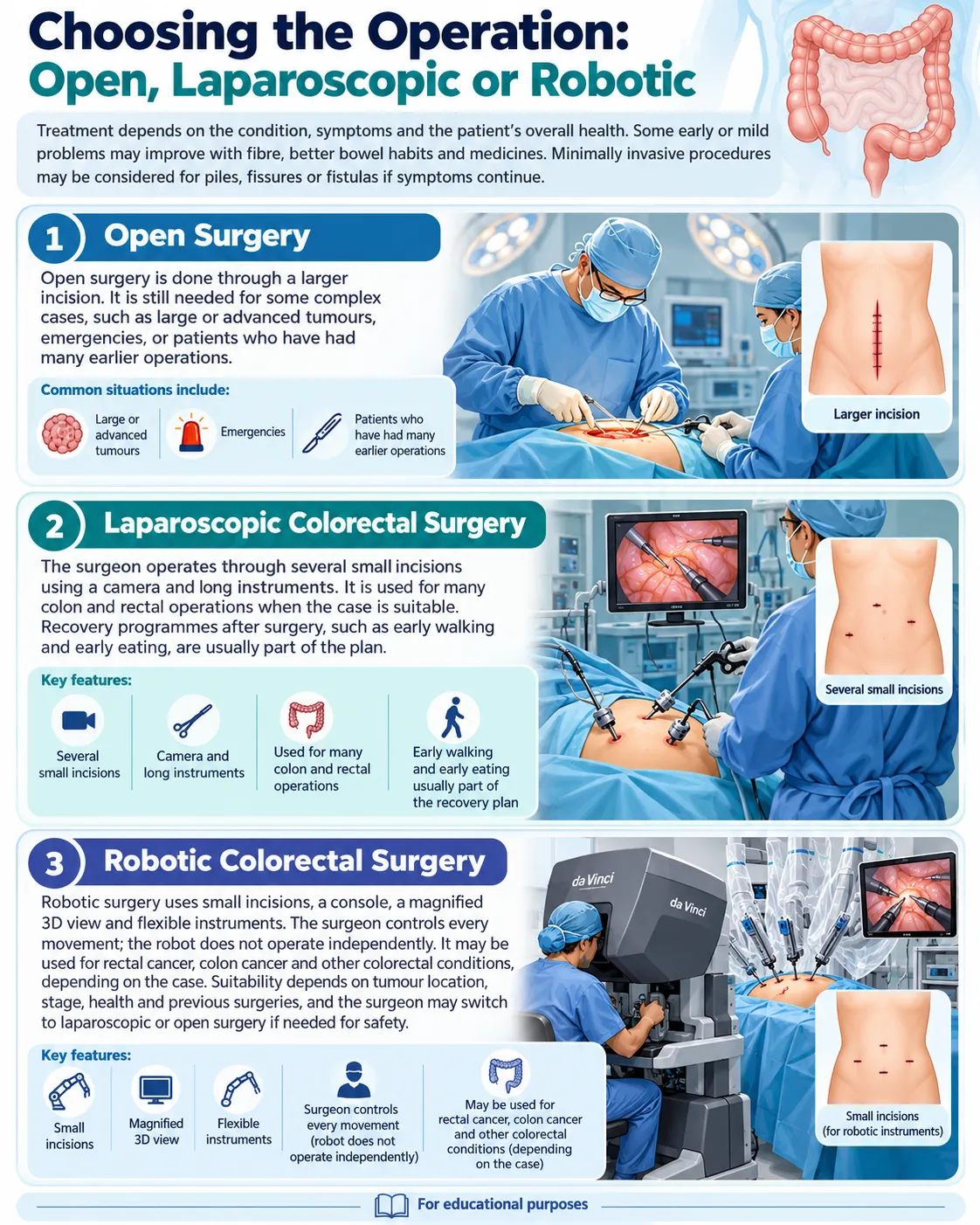
Colorectal surgery is the surgical treatment of conditions of the colon, rectum and anus, including colon cancer, rectal cancer, anal fistula, piles and anal fissure. It can be done as open, laparoscopic or robotic surgery, depending on the condition and the patient. Surgery is advised only when medicines or other treatments are not enough, or when the condition, such as cancer, needs it.
Bowel and anal problems are easy to put off. People wait, hope the bleeding stops, try a cream, and carry on. Sometimes that’s fine. Sometimes it isn’t, and the only way to know is to get examined. This page explains how common colorectal conditions are assessed and treated, and what decides the choice of operation.
What Is Colorectal Surgery?
Colorectal surgery covers operations on the large intestine, rectum and anus. The range runs from common problems like piles and fissures to colon and rectal cancers. The treatment depends on the diagnosis, its severity, the symptoms and the patient’s general health. Where possible, the plan tries to protect normal bowel function and, in rectal and anal surgery, the sphincter muscles that control continence.
Not sure whether you need a gastroenterologist or a surgeon? Read gastroenterologist vs GI surgeon: who treats what.
Conditions covered on this page:
Colorectal Cancer: Colon and Rectum
Colon Cancer
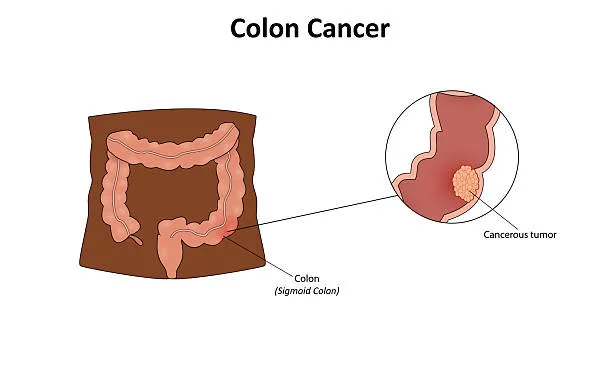
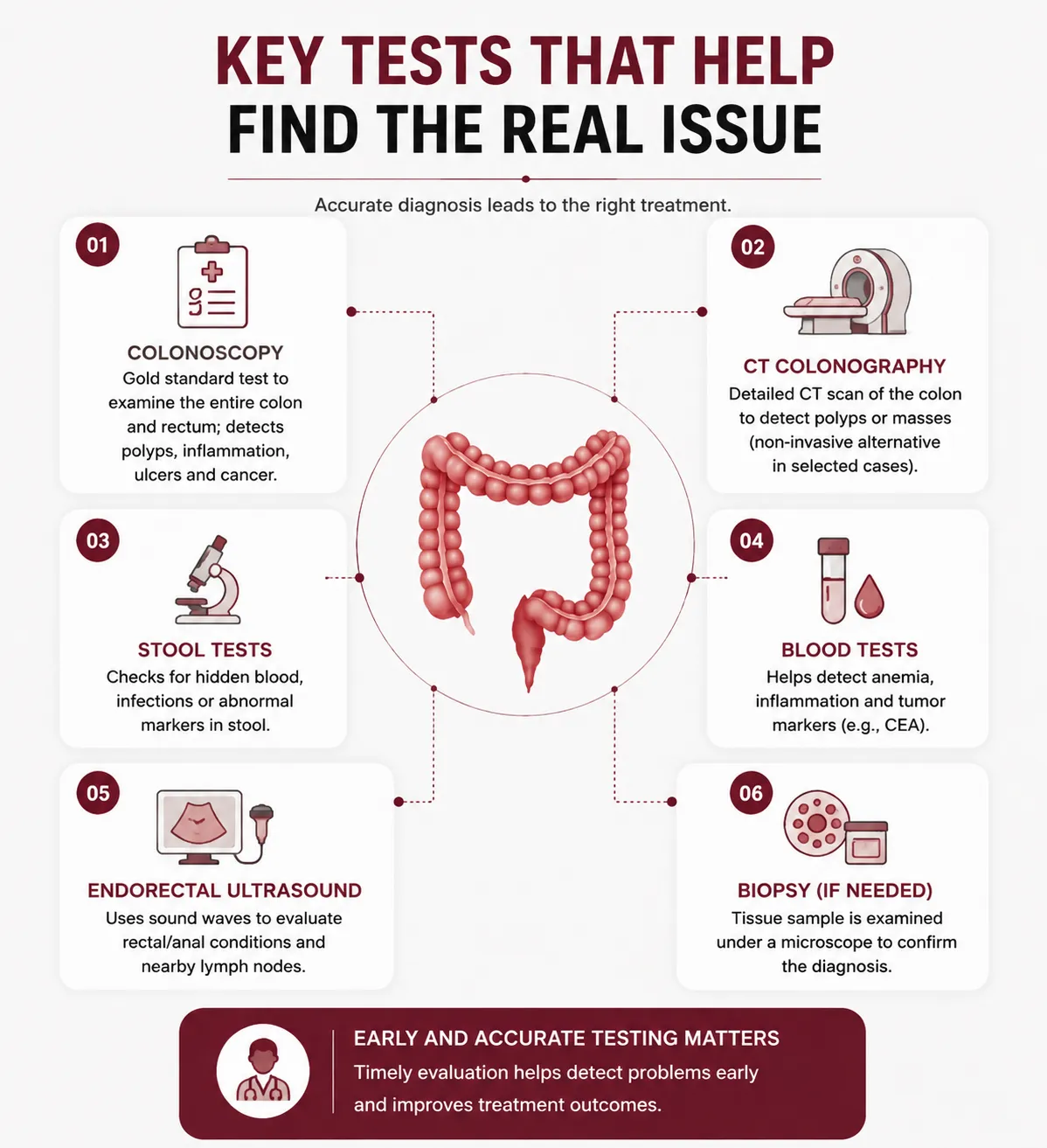
Colon cancer begins in the large intestine, often from a polyp that changes over time. Planning starts with a colonoscopy and biopsy to confirm the diagnosis. A CT scan of the chest, abdomen and pelvis shows whether the disease has spread, and a blood test for CEA is often done as a baseline. Together these give the stage (using the TNM system), which guides treatment.
Read More..
Surgery (colectomy) removes the section of colon carrying the tumour, with its blood supply and the lymph nodes that drain it. The surgeon then joins the two ends of bowel, which is called an anastomosis. A temporary stoma is sometimes needed, for example in an emergency with blockage. After surgery, the removed tissue is examined under the microscope. This report, including the lymph node findings, decides whether chemotherapy is advised.
Rectal Cancer
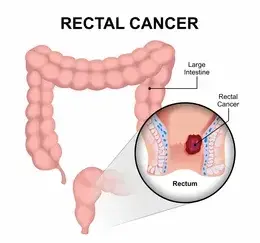
The rectum sits in the narrow space of the pelvis, close to the sphincter muscles, bladder and nerves for urinary and sexual function. This is why rectal cancer is planned differently from colon cancer. An MRI of the pelvis shows how far the tumour is from the anal opening and whether it is close to the surrounding tissue layer, known as the mesorectal fascia.
Read More..
Some patients are advised radiotherapy, with or without chemotherapy, before surgery. This is decided by a team that includes the surgeon, oncologist and radiologist.
The standard operation is total mesorectal excision (TME), which removes the rectum together with the fatty tissue around it. Depending on the tumour’s position, this may be a low anterior resection, where the bowel is rejoined, or an abdominoperineal resection, where a permanent stoma is needed. Tumours close to the sphincter are the ones where preserving it is hardest. A temporary stoma is often made to protect a low join while it heals. Some patients notice changes in bowel habit after rectal surgery, such as urgency or frequent stools.
Benign Anal Conditions
Anal Fistula
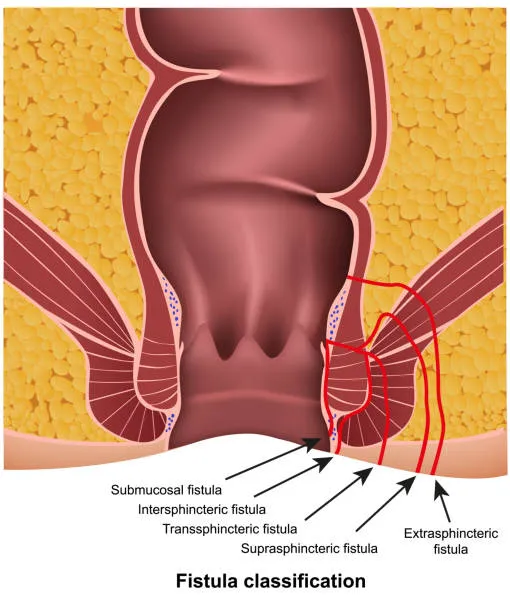
A fistula is a small abnormal channel connecting the inside of the anal canal to the skin nearby. It usually follows an infection or abscess. Fistulas are classified by how they pass through the sphincter muscles: intersphincteric, transsphincteric, suprasphincteric or extrasphincteric. The higher and more complex the tract, the greater the risk to continence if it is cut.
Read More..
Simple, low tracts can often be laid open. Complex or recurrent tracts need an MRI to find every branch and the internal opening, since a missed side tract is a common reason for recurrence. Options for complex fistula include a seton (a thread that drains the tract), sphincter-saving procedures such as LIFT or a flap, and other techniques, chosen for the individual tract. Fistulas linked to Crohn’s disease need a different approach, so the cause is checked first.
Piles (Haemorrhoids)
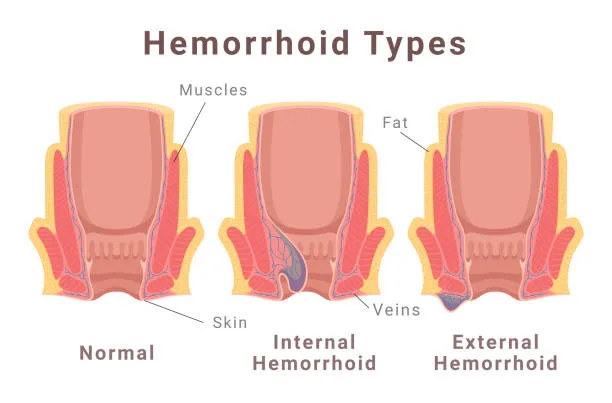
Piles are swollen cushions of blood vessels in or around the anal canal. They are graded from I to IV, from piles that only bleed to those that stay outside and cannot be pushed back. Grade I and II usually respond to fibre, fluids, avoiding straining and medicines. Office procedures such as rubber band ligation or sclerotherapy suit some patients. Surgery, such as haemorrhoidectomy, is kept for larger piles or those that don’t respond. Bleeding should not be assumed to be piles, particularly after the age of 40 or with a change in bowel habit, since colorectal cancer can cause the same bleeding.
Anal Fissure
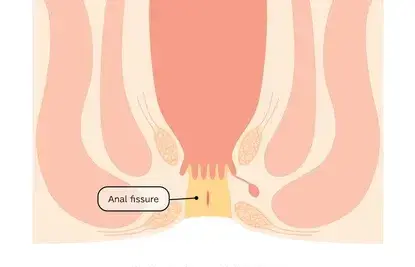
A fissure is a small tear in the lining of the anal canal, most often at the back midline. It hurts during and after a bowel movement, and there can be some bleeding. A fissure lasting more than about six to eight weeks is called chronic. First-line treatment is fibre, fluids and prescribed ointments that relax the sphincter. If these fail, options include botulinum toxin injection or a surgical procedure such as lateral internal sphincterotomy, which carries a small risk of affecting continence. A fissure in an unusual position should be examined for other causes. Read more about fissure treatment, or see anal fissure: when is surgery needed vs creams.
Symptoms That Need a Doctor’s Opinion
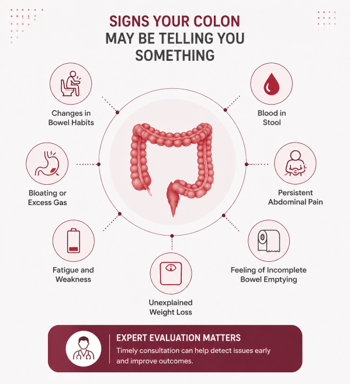
Bleeding from the rectum (see blood in stool: piles, fissure or something worse)
An abnormal colonoscopy report
Piles, fissure or fistula problems that keep coming back (see why anal fissures keep coming back after healing)
Plenty of these turn out to be harmless. A few don’t. You can’t tell which from the symptom alone, so if any of them last more than a couple of weeks, see a qualified doctor. People with a family history of colorectal cancer or polyps may need screening earlier than others, and the doctor can advise on timing.
How Are Colorectal Conditions Diagnosed?
Choosing the Operation: Open, Laparoscopic or Robotic
Treatment depends on the condition, the symptoms and the patient’s health. It can be as simple as a change in diet, or it can be an operation. Early or mild problems are often handled with fibre, better bowel habits and medicines, and a minimally invasive procedure may be considered for piles, fissures or fistulas if symptoms continue.
When Is Colorectal Surgery Advised?
How Treatment Is Usually Planned
1. Examination
2. Review of reports
3. Diagnosis and staging
4. Team discussion
5. Discussion of options
6. Surgery, if needed
7. Follow-up
Dr. Shashank Agrawal: Treating Doctor
Qualifications
- MBBS (2016)
- MS, General Surgery (2019)
- DrNB, GI Surgery (2022)
Registration
- Delhi Medical Council: Reg. No. 9111
- Uttar Pradesh Medical Council: Reg. No. 12711
Areas of practice
- Colon and rectal cancer surgery (laparoscopic, robotic and open)
- Complex and recurrent anal fistula
- Piles and anal fissure
- Other colorectal and gastrointestinal conditions
Plenty of these turn out to be harmless. A few don’t. You can’t tell which from the symptom alone, so if any of them last more than a couple of weeks, see a qualified doctor. People with a family history of colorectal cancer or polyps may need screening earlier than others, and the doctor can advise on timing.
What Our Patients Say


