
A pancreatitis diet keeps fat low and nutrients high, so your pancreas has less work to do between meals. In practice that means small, frequent meals built around lean protein, fruits, vegetables and whole grains. Fried food, full-fat dairy and alcohol are the usual things to cut. Doing this consistently lowers the chance of another painful flare-up.
According to Dr. Shashank Agrawal, a Gastroenterologist in Ghaziabad, “After an attack, many patients stop eating almost entirely because they are afraid of the pain. That is not the answer either. The pancreas needs a steady supply of light, low-fat meals to recover, and the right plan depends on whether the pancreatitis is acute or chronic. Alcohol is the one thing I ask every patient to stop. If the pain comes back strongly or you cannot keep food down, please do not try to manage it with diet alone.”
Foods to Eat With Pancreatitis for Easier Digestion
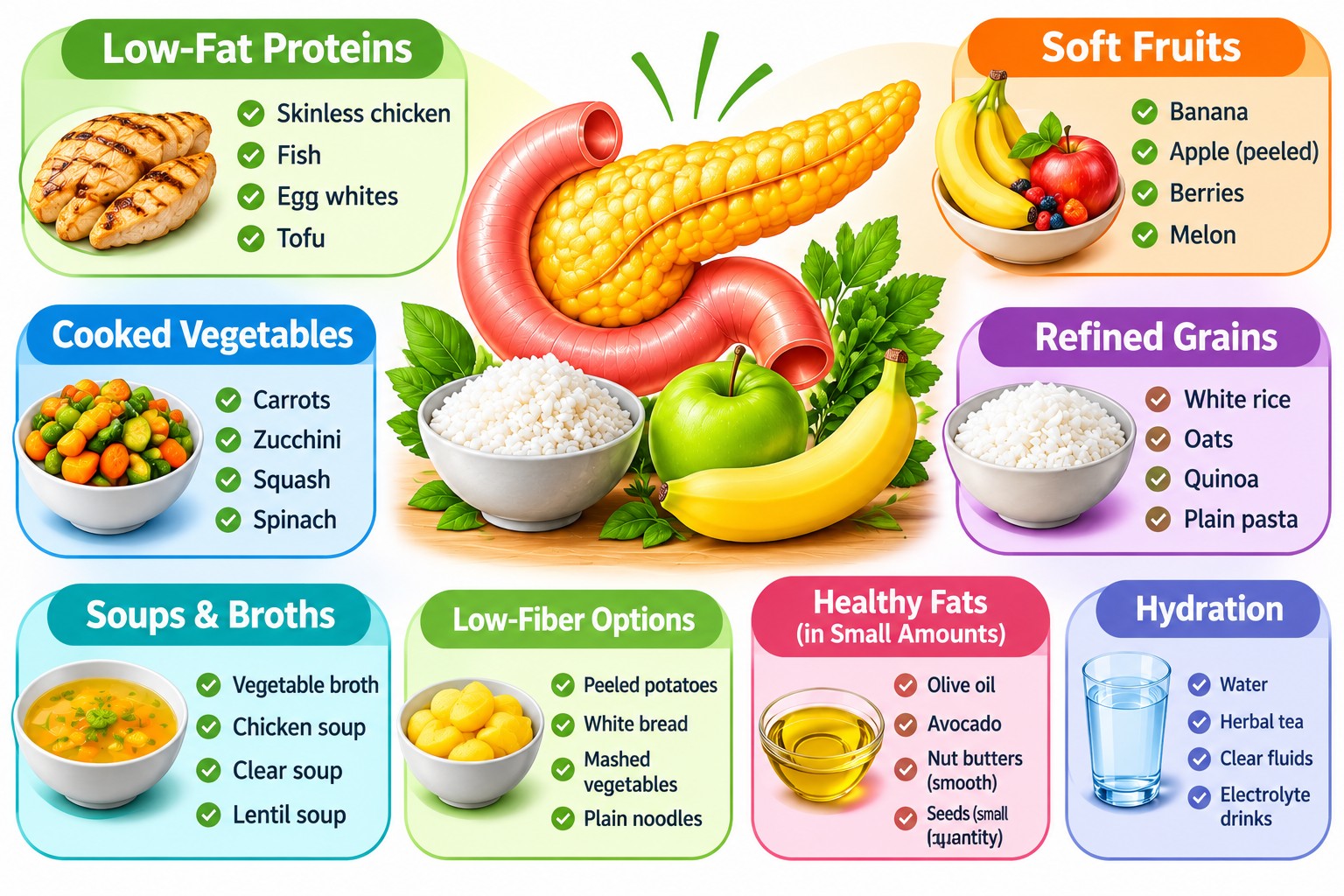
- Lean proteins. Skinless chicken, fish, egg whites, lentils and tofu give your body what it needs to heal without a heavy load of fat. Protein matters more than people expect, especially in chronic cases where weight loss is common.
- Fruits and vegetables. Cooked vegetables, bananas, apples, papaya and berries are gentle and rich in antioxidants. Raw or very fibrous items may be harder to tolerate during a flare, so start with cooked ones
- Whole grains and low-fat dairy. Oats, brown rice, roti, skimmed milk and low-fat curd give steady energy. Choose the low-fat version every time, because full-fat dairy undoes a lot of the good work.
- Plenty of fluids in small, frequent meals. Water, clear soups, coconut water and dal water help prevent dehydration. Having five or six small meals through the day is usually easier on the pancreas than three large ones.
If you have pain after meals, talk to a specialist.
Foods to Avoid With Pancreatitis to Prevent Flare-Ups
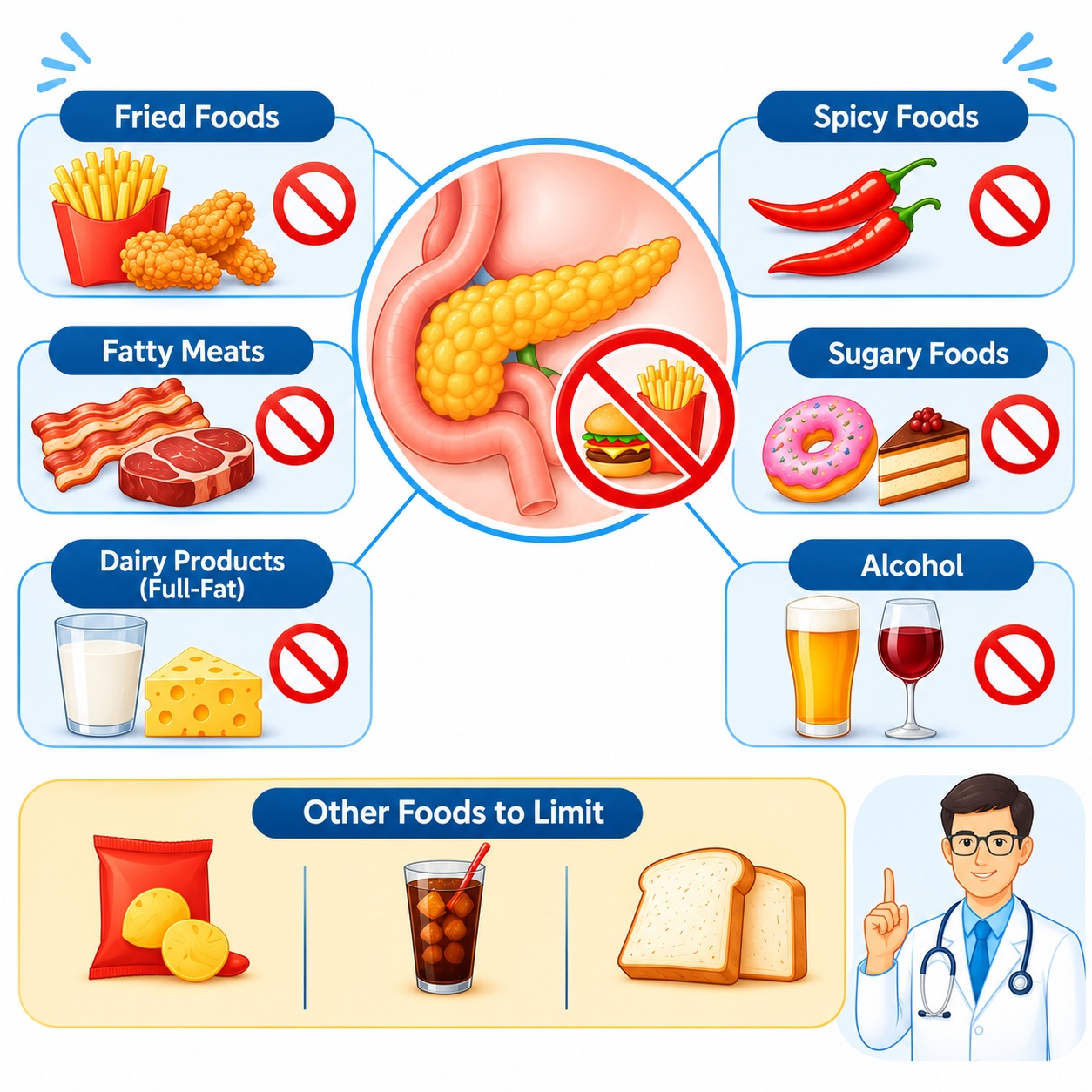
- Alcohol. It is one of the leading causes of pancreatitis and a common trigger for repeat attacks. Even small amounts can set things off, and smoking adds to the risk.
- Fried and oily food. Samosas, pakoras, fast food, butter, ghee in large amounts and cream-based gravies force the pancreas to work hard. A single heavy meal can bring back the pain. Our post on severe abdominal pain after eating spicy food explains why some meals trigger pain.
- Processed and red meat. Sausages, bacon, organ meats and fatty cuts are high in saturated fat and slow to digest. Swap them for fish, chicken without skin or plant protein. If your pain has an unclear cause, a clinical evaluation helps.
- Sugary foods and packaged snacks. Sweets, soft drinks and packaged snacks add calories without nutrition, and high triglycerides from a sugary diet can themselves trigger pancreatitis. Cut these back, especially if you already have diabetes or fatty liver.
What Determines the Right Diet for Pancreatitis?
Two people with pancreatitis can end up on quite different plans. These are the things that decide it:
- Acute or chronic. In an acute attack you may need a short period of rest from food in the hospital, then a gradual return to eating. Chronic pancreatitis needs a long-term plan.
- The cause. Gallstones, alcohol, high triglycerides and blocked ducts each need different handling, not just a diet change.
- How well your pancreas is working. If it is not making enough digestive enzymes, you may need enzyme supplements and a closer look at fat absorption and vitamins.
- Your weight and nutrition. Some patients need to eat more protein and calories, not less, to stop weight loss.
- Other conditions. Diabetes, fatty liver and kidney problems all change what is safe on your plate.
Key Takeaways
- A pancreatitis diet is low in fat, high in nutrients and spread across small, frequent meals.
- Lean protein, cooked vegetables, fruit, whole grains and low-fat dairy are the safest daily choices.
- Alcohol, fried food, processed meat and sugary snacks are the main foods to avoid with pancreatitis.
- Acute and chronic pancreatitis need different diets, and the cause matters as much as the symptoms.
- Severe pain, repeated vomiting or being unable to eat needs medical care, not diet changes.
Get expert guidance on managing pancreatitis with the right diet and nutrition plan.
Frequently Asked Questions
What is the best diet for pancreatitis?
A low-fat diet with small, frequent meals works best for most people. It centres on lean protein, fruits, vegetables and whole grains, with plenty of fluids. Your exact plan depends on whether the condition is acute or chronic.
Which foods should I avoid with pancreatitis?
Avoid alcohol, fried and oily food, full-fat dairy, processed or red meat, and sugary packaged snacks. These put extra strain on the pancreas and can trigger a flare-up.
Can I eat eggs, rice and curd if I have pancreatitis?
Usually yes, in the right form. Egg whites, plain rice and low-fat curd are generally well tolerated. Whole eggs and full-fat curd may be a problem for some people, so check with your doctor.
Can diet alone cure pancreatitis?
No. Diet helps the pancreas recover and lowers the chance of repeat attacks, but it does not treat the underlying cause such as gallstones or alcohol use. Severe or recurring cases need medical or surgical care.
References:
- NIDDK – Eating, Diet and Nutrition for Pancreatitis: https://www.niddk.nih.gov/health-information/digestive-diseases/pancreatitis/eating-diet-nutrition
- Mayo Clinic – Pancreatitis: https://www.mayoclinic.org/diseases-conditions/pancreatitis/symptoms-causes/syc-20360227
Disclaimer
This article is for general information and education only. It is not a substitute for professional medical advice, diagnosis or treatment. Dietary needs in pancreatitis vary from person to person, so please consult a qualified doctor before changing your diet. If you have severe abdominal pain, repeated vomiting or fever, seek medical help right away.
