
Rectal Cancer Treatment in Ghaziabad

Rectal cancer is a type of cancer that develops in the rectum, the lower part of the large intestine. It is one of the most common cancers worldwide, with millions of new cases diagnosed each year. In India, its incidence is rising due to factors like diet, lack of exercise, and family history. While early detection is often asymptomatic, advancements in diagnostic tools like colonoscopy have improved the chances of identifying the condition at its earliest and most treatable stages.
Dr. Shashank Agrawal, a leading gastroenterologist and GI surgeon in Ghaziabad, emphasizes the importance of early detection: “Early-stage rectal cancer is highly treatable with surgery and other therapies, and the earlier it’s detected, the better the chances of a successful recovery.”
With years of experience in diagnosing and treating gastrointestinal cancers, Dr. Agrawal specializes in rectal cancer treatment in Ghaziabad. He provides cutting-edge care using minimally invasive techniques, ensuring that patients experience faster recovery and fewer complications. His expertise in rectal cancer allows for personalized treatment plans that aim to improve both survival rates and quality of life.
Overview of Rectal Cancer
Rectal cancer begins in the rectum, the lower part of the large intestine. It often starts as non-cancerous polyps that can become cancerous over time. Similar to colon cancer, it primarily affects individuals over 50 but can occur at any age. Early stages usually have no symptoms, making routine screening essential. As the cancer progresses, symptoms like rectal bleeding, weight loss, changes in bowel habits, and abdominal pain may appear.
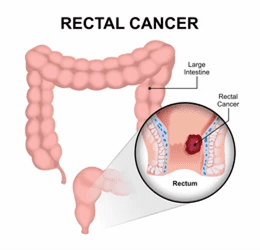
Dr. Shashank Agrawal, an acclaimed gastroenterologist in Ghaziabad, Uttar Pradesh, states, “If untreated, rectal cancer can spread to surrounding tissues and lymph nodes. However, with advancements in diagnosis and treatment, it can be effectively managed, allowing for a good quality of life post-treatment.”
Understanding the Different Types of Rectal Cancer
Rectal cancer can be classified based on the type of cells in which it originates. Understanding the different types is crucial for determining the most effective treatment plan.
Adenocarcinoma
Carcinoid Tumors
These are rare tumors that develop in the hormone producing cells of the rectum. These generally grow slowly and hence may take a long time to show symptoms.
Gastrointestinal Stromal Tumors (GISTs)
Lymphoma
Though rare, lymphoma can affect the rectum and is treated differently from adenocarcinoma. It originates in the rectal lymphatic tissue.
Squamous Cell Carcinoma
Rare in the rectum, this type of cancer develops in the squamous cells and is typically treated with a combination of surgery and radiation therapy.
What Treatment Options Are Available for You?
Several treatment options are available for rectal cancer, with the choice depending on the cancer’s stage, location, and the patient’s overall health.
By understanding which category you fall into, your care team can refine the next steps.
Surgery
Surgery is the primary treatment for rectal cancer, especially when the tumor is localized. The type of surgery depends on the size, location, and stage of the cancer. Here are the main surgical options:
Low Anterior Resection (LAR)
This operation involves the removal of the tumour and part of the rectum for tumours of the upper rectum; the bowel function is preserved. It’s common for early-stage rectal cancer.
Colostomy or Ileostomy (if necessary)
In advanced cases, when bowel reconnection isn’t possible, a colostomy or ileostomy creates an opening for waste to exit the body into a collection bag.
Dr. Shashank Agrawal, a competent GI surgeon in Ghaziabad, uses these advanced surgical techniques to ensure the best outcomes, aiming for a quicker recovery and minimal complications.
Radiation Therapy
High-energy rays are employed in radiation to target the cancerous cells. This is usually combined with chemotherapy, which can be used to shrink the tumor before surgery or treat remaining cells afterward.
Immunotherapy
Immunotherapy helps the body’s immune system recognize and destroy cancer cells. It may be an option for advanced cases of rectal cancer.
Laparoscopic Surgery (Minimally Invasive)
This surgery uses small incisions and a camera to remove the tumor, leading to faster recovery and smaller scars. It’s ideal for smaller, localized tumors.
Abdominoperineal Resection (APR)
When the tumor is near the anal sphincter, this surgery removes the rectum, anus, and surrounding tissue, requiring a permanent colostomy for waste removal.
Total Mesorectal Excision (TME)
This is the surgical procedure to remove the rectum along with the attached tissues. It is tailored accurately to prevent the recurrence of cancer. This is performed when the cancer has penetrated more deeply into the rectum.
Chemotherapy
Chemotherapy uses drugs to kill cancer cells or stop their growth. It may be used before surgery to shrink the tumor or after surgery to eliminate any remaining cancer cells.
Targeted Therapy
This newer form of treatment targets certain proteins or genes that cancer cells utilize to grow. It is usually done in advanced stages of rectal cancer or in cases where chemotherapy fails to work.
Curious about what treatment steps to expect? Let’s walk you through our structured approach to rectal cancer treatment for optimal results.
Our Approach to Rectal Cancer Treatment in Ghaziabad
Treatment is layered—starting conservative, progressing only as needed:

Diagnosis and Staging
Accurate diagnosis and staging through imaging tests form the basic step in treating rectal cancer; these include colonoscopy, CT scans, and MRIs. These diagnostic tests help determine the precise location, size, and extent of tumor spread.
Personalized Treatment Plan
Once diagnosed, Dr. Shashank Agrawal, a renowned rectal cancer doctor in Ghaziabad, offers a treatment plan tailored to the cancer stage and type. The mode of treatment may include one or a combination of surgery, chemotherapy, and radiation therapy.
Surgical Intervention
Dr. Agrawal often does the tumor resection by minimally invasive surgery-laparoscopic resection-so the scarring will be less and the recovery will be quicker.
Post-Treatment Care
After treatment, follow-up care is essential to monitor for recurrence and manage any post-surgery symptoms. This includes regular check-ups, imaging tests, and possibly more chemotherapy or radiation.
Continued Support
Emotional and psychological support for patients throughout their journey from diagnosis to treatment, through our approach, helps manage situations that can lead to stress and anxiety.
Worried about the cost of treatment? Let’s break down the cost and explore insurance options to make the treatment process easier and more affordable.
How Much Does Rectal Cancer Treatment Cost in Ghaziabad?
The cost of rectal cancer care in Ghaziabad can vary depending on several factors, such as the type of treatment required, the stage of cancer, and the healthcare facility. Surgery, including laparoscopic or open procedures, is typically the main cost, followed by any required chemotherapy, radiation therapy, or targeted treatments.
Additional expenses may include diagnostic tests, post-operative care, and follow-up visits. The overall cost may also be influenced according to the condition of the patient and the complexity of the case. Individual health insurance may cover all or part of the cost, according to the policy.
Wondering about the treatment success rates? Let’s discuss the expected outcomes and results based on your condition.
Success Rates and Results

Especially with laparoscopic surgery, the treatment for colon cancer is very effective, which is even more successful if the diagnosis is made in the early stages. The advanced techniques Dr. Shashank Agrawal uses minimize complications and reduce recovery time.
Most patients recover within 1-2 weeks after surgery and experience significant symptom relief. In more advanced cases, a combination of chemotherapy, radiation, and surgery can still yield positive results, aiming to improve quality of life and survival rates.
What Our Patients Say (Testimonials)
“I was terrified when I learned I had rectal cancer. Dr. Shashank Agrawal clearly outlined the treatment plan and supported me throughout the process. The surgery went smoothly, and today I’m fully recovered and back to normal life. I’m so grateful for the care I received.”
– Rajiv M.
“Finding blood in my stool was scary. When I saw Dr. Agrawal, he provided clear treatment options. The surgery went well, and my recovery was faster than I expected. I’m doing well today, thanks to his care.”
– Sunil K.
“I was diagnosed at a relatively early stage. Thanks to Dr. Shashank Agrawal’s timely intervention, my treatment was thorough, and I didn’t need extensive therapy. I’m grateful to be cancer-free now.”
– Anjali T.
Frequently Asked Questions
1. What are the early symptoms of rectal cancer?
Symptoms may include rectal bleeding, abdominal pain, changes in bowel habits, and unexplained weight loss.
2. How is rectal cancer diagnosed?
It is diagnosed through a combination of colonoscopy, biopsy, and imaging tests such as CT scans or MRIs.
3. What is the recovery time after rectal cancer surgery?
Most patients recover in 1-2 weeks after laparoscopic surgery, with more time required for open surgery.
4. How effective is radiation therapy for rectal cancer?
Radiation therapy is highly effective in shrinking tumors before surgery and ensuring that remaining cancer cells are eliminated afterward.
5. Can rectal cancer be prevented?
Regular screenings, a healthy diet, and avoiding smoking can reduce the risk of rectal cancer.
Disclaimer: The information shared in this content is for educational purposes and not for promotional use.