
Piles affect crores of people in India. Most of them quietly suffer for months, sometimes years, before they finally decide to seek treatment. The bleeding, the pain, the discomfort every single morning — it slowly starts affecting everyday life.
Laser surgery has changed how piles are treated today. It is quick, minimally invasive, and far more comfortable than what people imagine. But before anyone goes ahead with it, the one question that always comes up is — does it actually work?
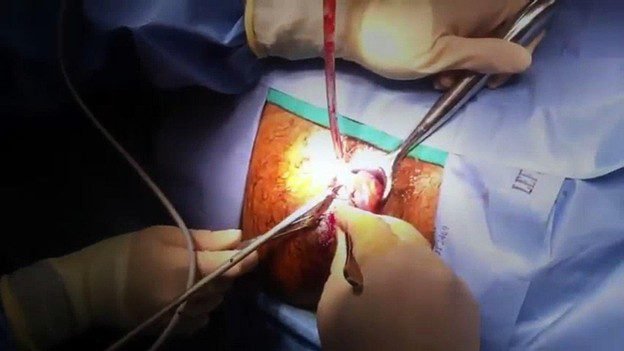
“Laser surgery for piles is one of the most reliable procedures we perform. When patients come in after months of managing symptoms on their own, I tell them the same thing — the success rate is high, recovery is faster than they expect, and results are long-lasting when the right care is followed after surgery.”
What Is Laser Surgery for Piles and How Does It Work?
Laser surgery for piles, also called Laser Hemorrhoidoplasty (LHP), uses a focused laser beam to shrink and seal haemorrhoidal tissue from within. There are no large cuts, no stitches, and no removal of tissue in most cases.
Here is how it works:
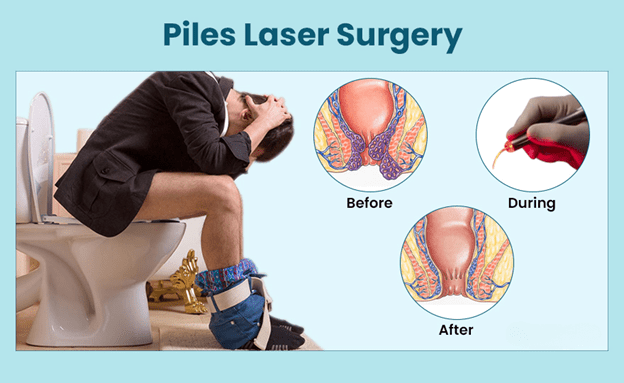
- Before the procedure
A proctoscopy is done to assess the grade and severity. The procedure is performed under local or short general anaesthesia. - During the procedure
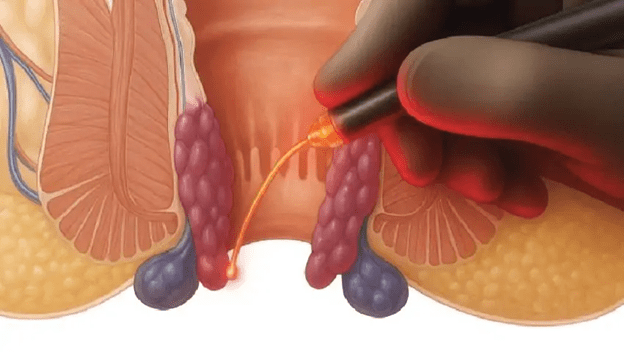
A thin laser probe is inserted into the haemorrhoidal tissue. Controlled laser energy shrinks the pile mass without touching the surrounding healthy tissue. - After the procedure
Most patients go home the same day. There is minimal bleeding, no open wound, and far less discomfort compared to open surgery.
The whole procedure takes around 20 to 40 minutes depending on the grade being treated.
What Is the Success Rate of Laser Surgery for Piles?
Laser surgery for piles, also called Laser Hemorrhoidoplasty (LHP), uses a focused laser beam to shrink and seal haemorrhoidal tissue from within. There are no large cuts, no stitches, and no removal of tissue in most cases.
What success looks like in real terms:
- Bleeding stops completely in the majority of patients
- Prolapse reduces significantly or disappears
- Patients return to daily routine within 3 to 5 days
- Very low risk of serious complications
- Low recurrence rate when post-operative care is followed
Factors That Affect the Success of Laser Piles Surgery
While the overall success rate is high, individual outcomes depend on a few key factors:
- Grade of piles: Grade 2 and Grade 3 respond best. Grade 4 may need a combined approach.
- Surgeon’s experience: Laser surgery demands precision. The skill of the operating surgeon directly impacts results.
- Post-operative diet and lifestyle: High fibre intake, good hydration, and avoiding straining are essential to prevent recurrence.
- Underlying conditions: Chronic constipation, obesity, or prolonged sitting can increase the chances of piles returning if not addressed.
- Timing of treatment: Earlier the treatment, the simpler the procedure and the better the outcome.
Dr. Shashank Agrawal adds:
Laser Surgery vs Traditional Surgery for Piles – Which Is Better?
|
|
Laser Surgery |
Traditional Surgery |
|
Cuts required |
None or minimal |
Large incisions |
|
Pain after surgery |
Mild |
Moderate to severe |
|
Hospital stay |
Same day or 24 hours |
2 to 3 days |
|
Recovery time |
3 to 5 days |
2 to 4 weeks |
|
Stitches needed |
No |
Yes |
|
Recurrence rate |
Low |
Slightly higher |
Traditional surgery still has its place in complex or advanced Grade 4 cases. But for the large majority of patients, laser surgery is the better choice — less painful, faster, and equally effective in the long run.
When Should You Consider Laser Surgery for Piles?
Not every case of piles needs surgery. Mild Grade 1 piles are usually managed with diet and medication. Laser surgery becomes the right step when:
- Bleeding during bowel movements is frequent or heavy
- Haemorrhoids are prolapsing and not going back on their own
- Pain and discomfort are affecting sleep and daily routine
- Medicines and lifestyle changes have stopped giving relief
- Symptoms keep coming back every few months
If any of these sound familiar, it is time to get a proper evaluation rather than continuing to manage at home.
As a piles treatment specialist in Ghaziabad, Dr. Shashank Agrawal assesses each patient individually — grade, symptoms, and overall health — before deciding the best treatment approach.
“Most patients I see have already tried everything — creams, diet changes, home remedies. By the time they walk in, their piles are Grade 3 and they’ve been suffering for no reason. Early consultation always means simpler treatment and faster recovery.”
Traditional surgery still has its place in complex or advanced Grade 4 cases. But for the large majority of patients, laser surgery is the better choice — less painful, faster, and equally effective in the long run.
Conclusion
Laser surgery for piles has a success rate of up to 98% in the right candidates. It is safer, less painful, and far quicker in recovery compared to traditional surgery. For Grade 2 and Grade 3 haemorrhoids, it is today the most preferred choice among patients and surgeons alike.
The procedure works best when done by an experienced GI surgeon and supported by the right post-operative care. If bleeding, pain, or prolapse is making daily life difficult, do not delay getting evaluated. Earlier diagnosis always means a simpler solution.
Frequently Asked Questions
Is laser surgery for piles painful?
How long does recovery take?
Can piles return after laser surgery?
Is laser surgery suitable for all grades of piles?
It works best for Grade 2 and Grade 3. Grade 1 often does not need surgery. Grade 4 may need a combined approach. Your surgeon will assess and advise accordingly.