
GI Cancer Surgeon in Ghaziabad
GI cancers refer to cancerous tumors in the digestive system that may affect organs such as the stomach, intestine, colon, rectum, liver, pancreas, and gallbladder. GI cancer cases have been rising across the world, as per global cancer statistics. Millions of new cases of GI cancer have been reported every year due to their prevalence as some of the most common cancers globally. Awareness and advanced facilities in India have been helping more and more patients get examined and treated in time.
A thorough diagnosis of the cancer type, stage, and spread is required to treat GI cancers. As per Dr. Shashank Agrawal, a reputed GI Cancer Surgeon in Ghaziabad, “Every case of GI cancer is unique. It is very important to understand the cancer case by doing a careful diagnosis and staging of the cancer before planning an appropriate treatment option for each patient.”
Dr. Shashank Agrawal specialises in complex cancer surgeries of the digestive system. His expertise includes advanced procedures for stomach, colorectal, liver, pancreatic, and gallbladder cancers, along with minimally invasive surgical techniques.
What GI cancers include? Let’s explore the cancers that affect the digestive system.
Understanding GI (Gastrointestinal) Cancers
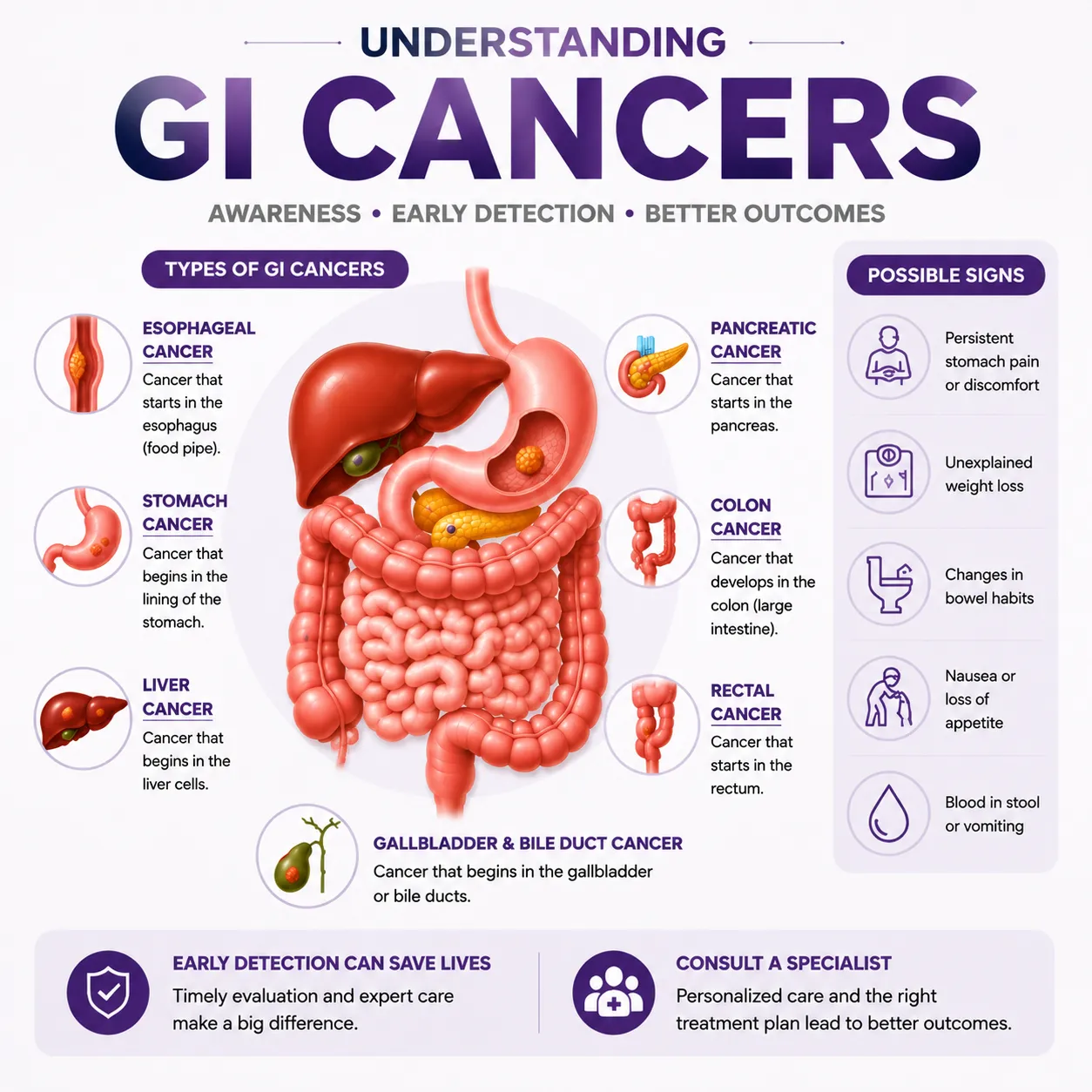
Common GI cancers include:
Stomach cancer affecting the lining of the stomach
Colon and rectal cancer affecting the large intestine
Pancreatic cancer involving the pancreas
Liver cancer affecting liver tissue
Gallbladder cancer affecting the gallbladder and bile system
Not sure when a GI cancer surgeon is needed? Let’s understand the conditions managed by a specialist.
What Does a GI Cancer Surgeon Treat?
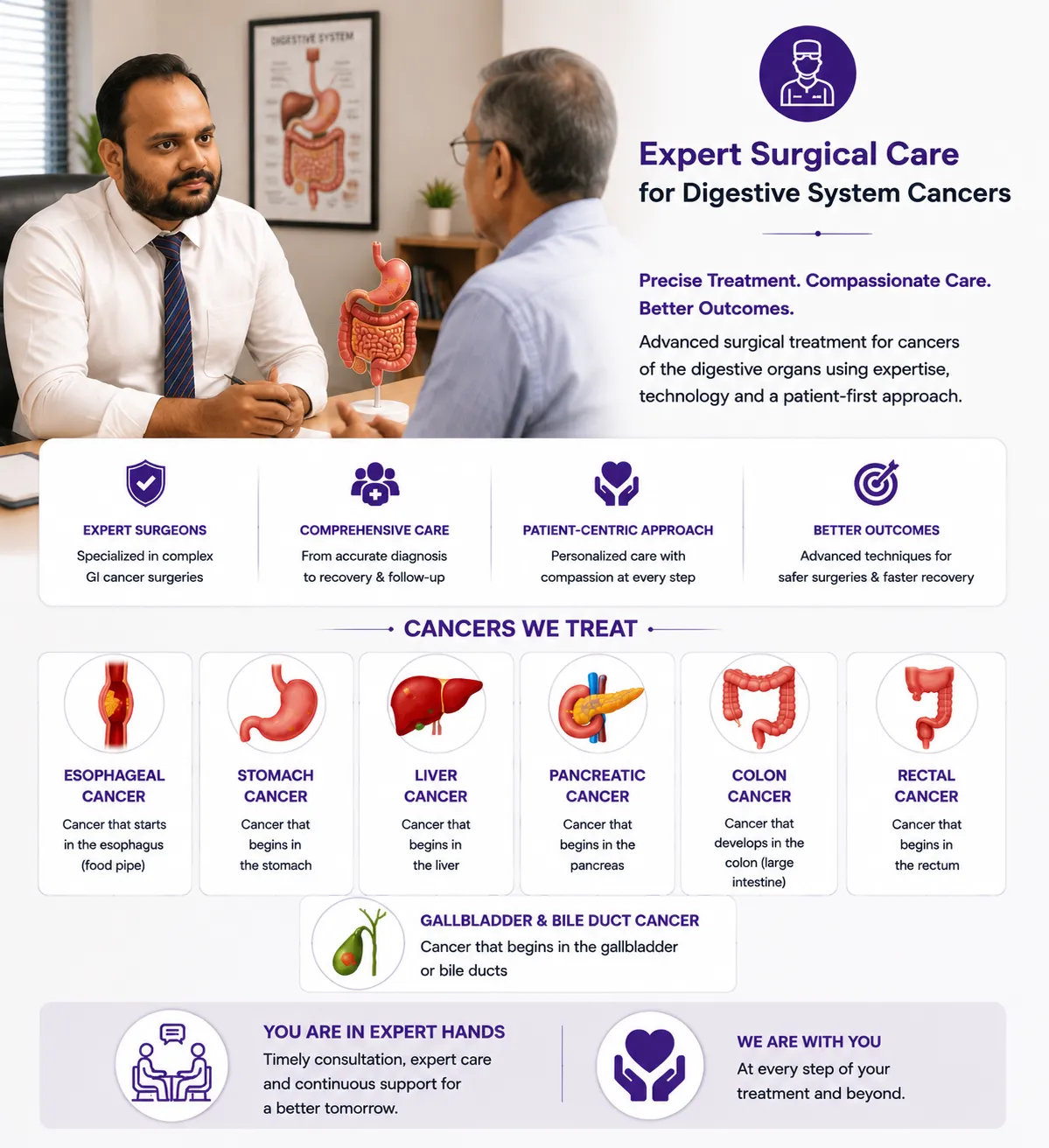
A GI cancer surgeon focuses on diagnosing and treating cancers of the digestive system — usually working through a mix of surgical and multidisciplinary approaches.
That can include:
Stomach and gastric cancers
Dr. Shashank Agrawal takes a specialised GI oncology approach in Ghaziabad — combining accurate diagnosis, advanced surgery, and coordinated care to improve treatment outcomes.
Cancer treatment decisions require specialised expertise.
Connect with a professional to explore the right treatment pathway.
Seeking information about different GI cancers? Let’s explore the major cancers treated through specialised gastrointestinal care.
Cancers We Treat
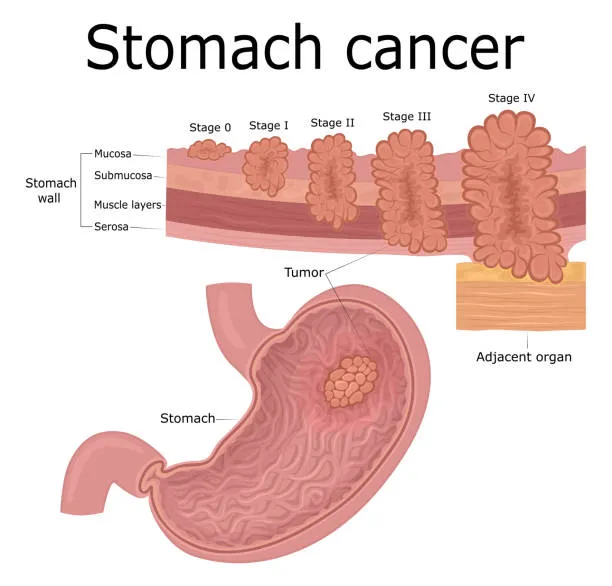
This develops when abnormal cells begin growing within the stomach lining. Depending on the stage at diagnosis, treatment could include surgery, chemotherapy, or both.
Read More..
In cases where the cancer is confined and operable, surgery may involve removing part of the stomach or occasionally the whole organ along with the surrounding lymph nodes.
Dr. Shashank Agrawal, an eminent gastric cancer surgeon in Ghaziabad, evaluates the tumour location and disease extent before planning treatment.
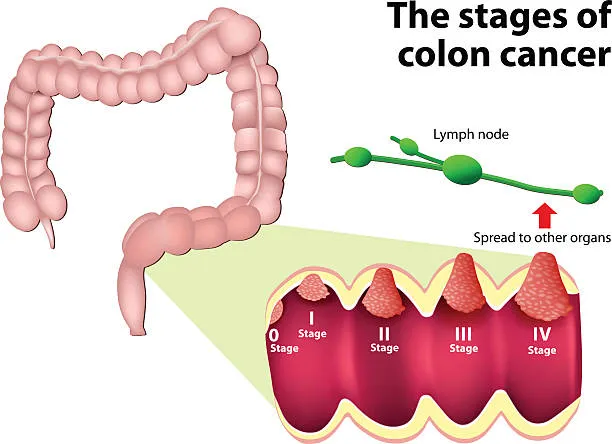
Colon Cancer
Colon cancer affects the large intestine and may develop from abnormal growths called polyps. Early detection allows more effective treatment planning.
Read More..
When the tumour hasn’t spread, surgery is often the first recommendation — removing the affected section of the colon while preserving as much healthy tissue as possible.
More detail on this is available under Colon Cancer Treatment in Ghaziabad.
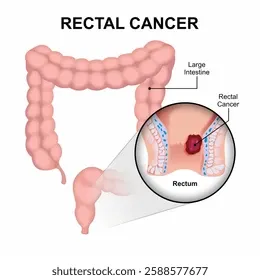
Rectal Cancer
Rectal cancer affects the lower part of the large intestine and often requires careful planning due to its location near important pelvic structures.
Read More..
Depending on stage and location, treatment might involve surgery alone, or a combination with chemotherapy and radiation.
Patients can find more information under Rectal Cancer Treatment in Ghaziabad.
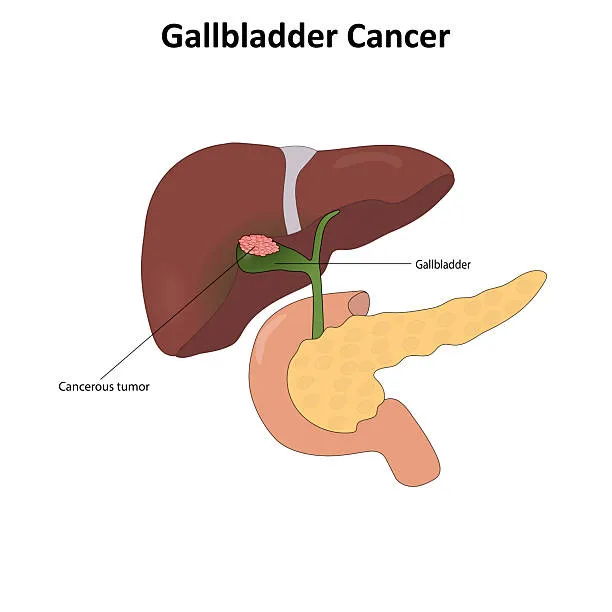
Gallbladder Cancer
This one often catches patients off guard it’s sometimes discovered incidentally, during evaluation for a routine gallbladder complaint like gallstones.
Read More..
Treatment usually depends on the stage, and in many cases involves removing the gallbladder along with any tissue nearby that’s been affected.
Anyone dealing with related gallbladder issues can also look into Gall Bladder (Cholelithiasis) Treatment in Ghaziabad.
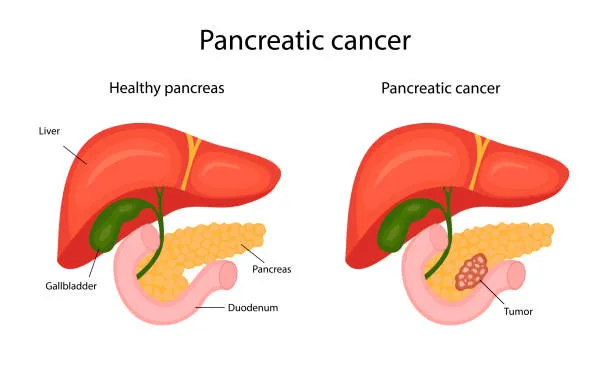
Pancreatic Cancer
Among GI cancers, this is one of the most complex ones to manage, largely because of the pancreas’s location and its nearby structures. A thorough workup is essential before any treatment decision is made.
Read More..
For a subset of patients, surgery remains a main option — including the Whipple procedure, most often used for tumours in the head of the pancreas.
Further detail is available under Pancreatic Cancer & HPB Surgery in Ghaziabad.
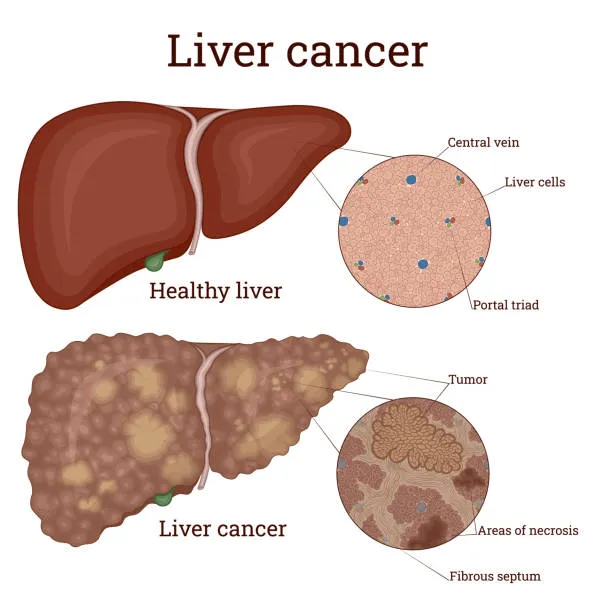
Liver Cancer
Liver cancer may develop directly in the liver or spread from other cancers. Treatment depends on tumour size, location, liver function, and overall health.
Read More..
Some patients may benefit from liver surgery, ablation procedures, or other cancer therapies.
Patients can explore Liver & HPB Surgery in Ghaziabad for specialised liver cancer evaluation.
Reach out to a specialist to understand your condition better.
Not everyone knows which symptoms are worth flagging early, here’s what to keep an eye on.
Common Symptoms of GI Cancer
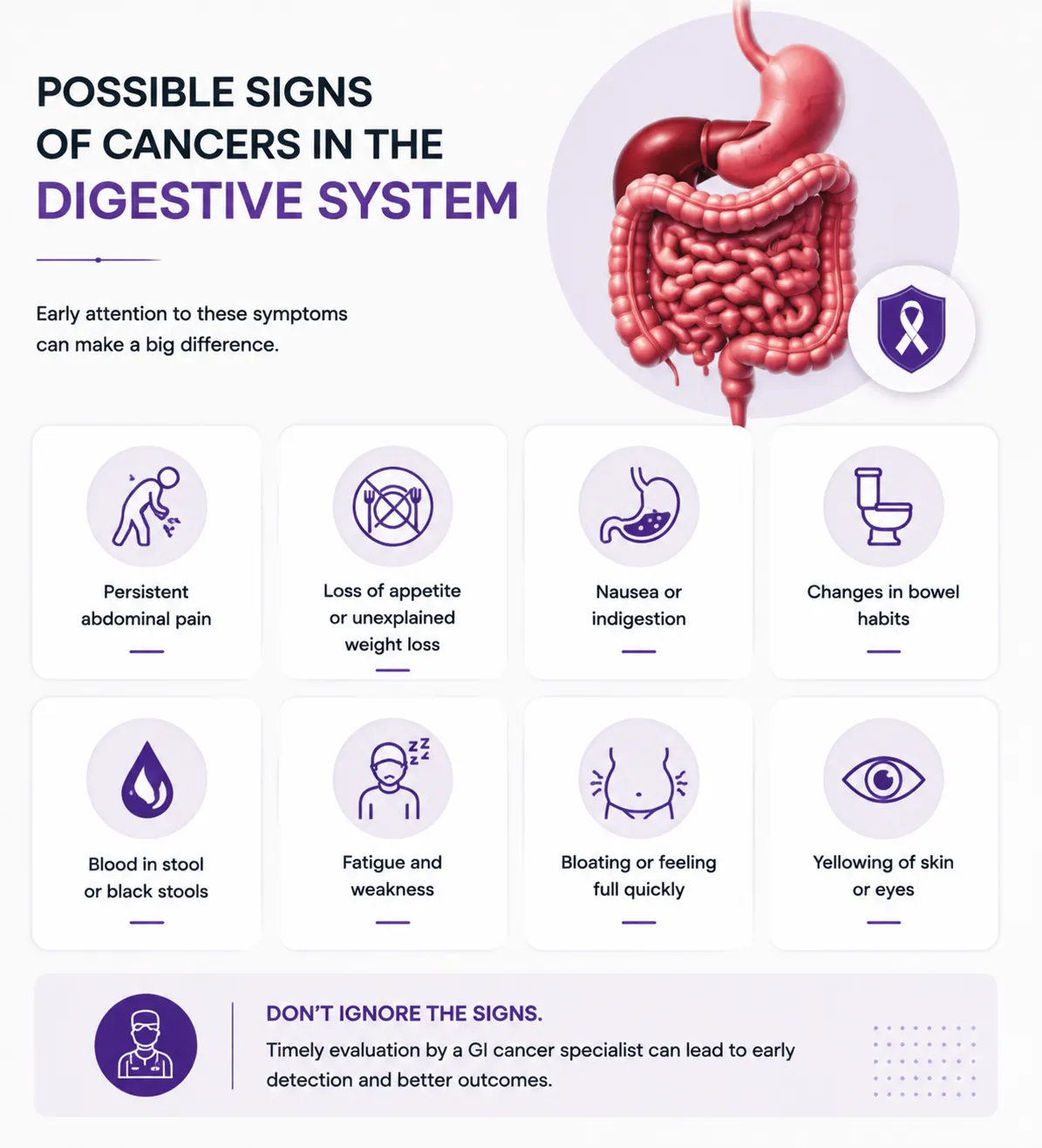
Persistent Abdominal Pain : Ongoing discomfort, bloating, or pain shouldn’t just be brushed off.
Persistent Vomiting or Loss of Appetite : Ongoing nausea or appetite loss deserves a closer look.
Wondering how doctors actually confirm a GI cancer diagnosis? Here’s the process.
How Are GI Cancers Diagnosed?
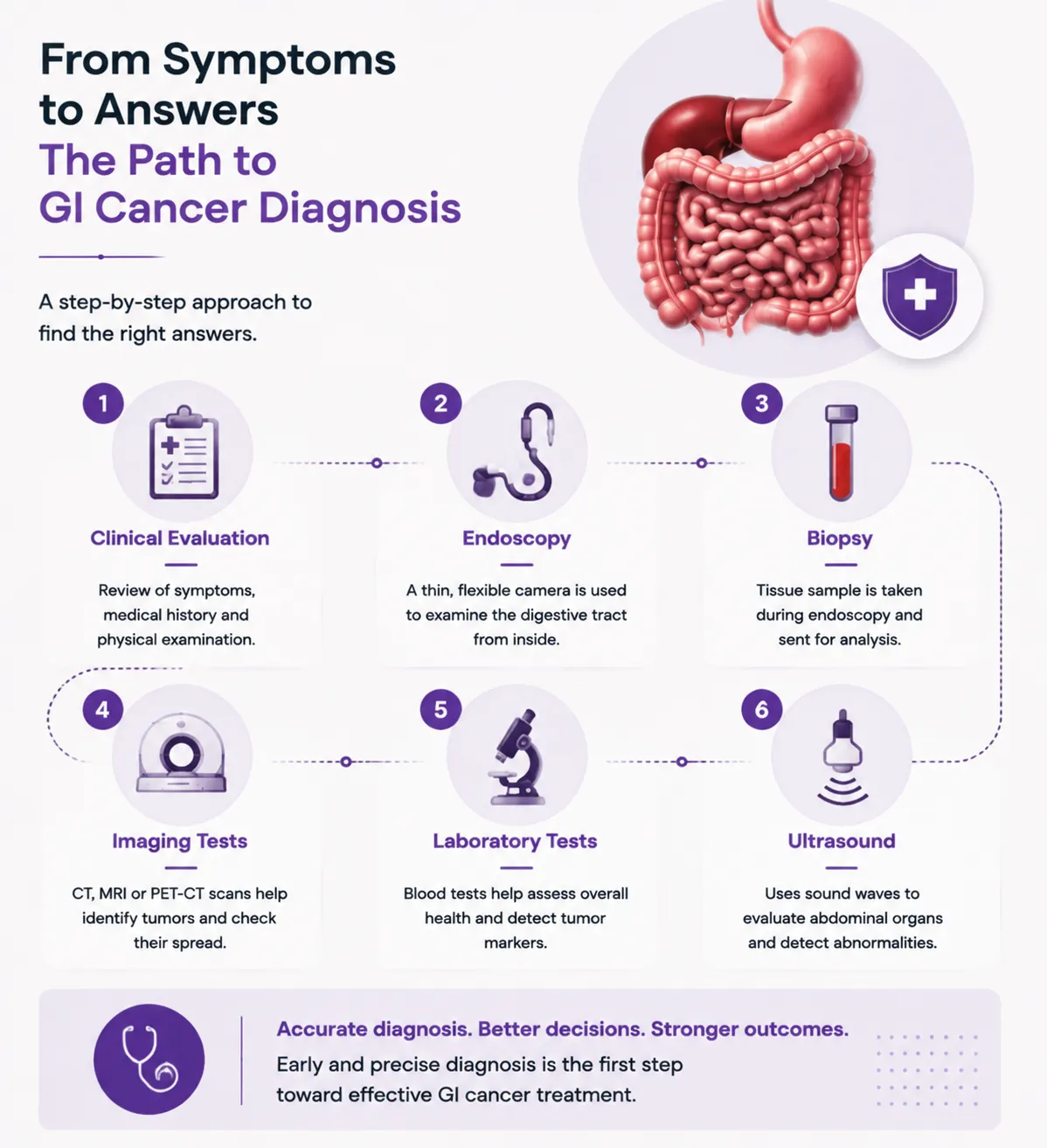
Getting the diagnosis accurate is what shapes everything downstream, cancer type, stage, and the treatment plan.
Wondering why early detection is important in GI cancer? Let’s understand how timely diagnosis can improve treatment planning.
Why Early Diagnosis Matters
Paying attention to warning signs — unexplained weight loss, digestive changes, ongoing abdominal discomfort — is often what leads to catching things sooner rather than later.
Early diagnosis also allows better coordination between surgery, chemotherapy, radiation, and supportive treatments when required.
Looking for available treatment options for GI cancer? Let’s explore the approaches used based on cancer type and stage.
GI Cancer Treatment Options
Surgery
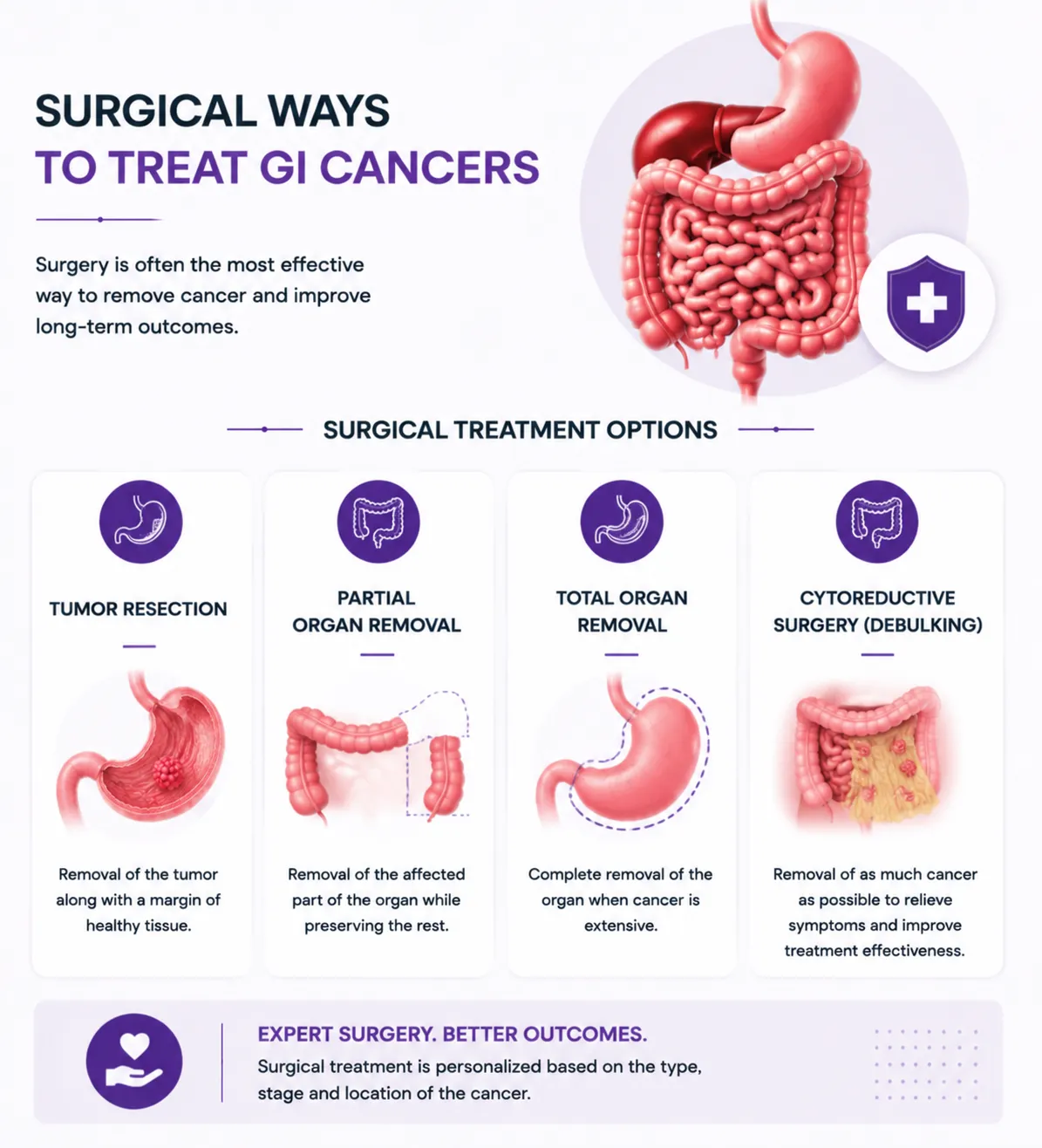
Depending on the cancer location, procedures may include:
Advanced techniques such as minimally invasive surgery may be considered for suitable patients.
Chemotherapy, Radiation & Targeted Therapy

Chemotherapy uses medication to kill cancer cells or slow their growth sometimes given before surgery to shrink a tumour, sometimes after to lower the chance of recurrence.
Radiation and targeted treatments may also be part of the plan, depending on the cancer type and the individual case.
A coordinated GI oncology Ghaziabad approach helps combine different treatments for better patient care.
Not sure how doctors choose between surgical techniques? Here’s the comparison.
Surgical Approach: Laparoscopic vs. Open Surgery in Cancer Cases
The surgical approach for cancer treatment depends on the tumour type, location, and patient condition. Here is a quick comparison of laparoscopic and open surgery:
| Factor | Laparoscopic Surgery | Open Surgery |
| Technique | Uses small incisions, camera, and specialised instruments. | Uses a larger incision for direct access to the surgical area. |
| Suitable For | Selected cancers where minimally invasive surgery is possible. | Complex cases requiring wider access and better control. |
| Recovery | Usually involves faster recovery and less discomfort. | May require longer recovery due to a larger incision. |
| Scarring | Smaller scars compared to open surgery. | Larger surgical scar. |
| Decision Factors | Depends on tumour size, location, cancer stage, and patient health. | Preferred when it provides safer and more complete tumour removal. |
Our Approach to GI Cancer Treatment in Ghaziabad
Personalised Treatment Planning : A plan is built specifically around the patient’s condition, not a generic protocol.
Planning cancer treatment and concerned about costs? Let’s understand the factors that influence surgery expenses.
Cost of GI Cancer Surgery in Ghaziabad
Choosing the right surgeon matters as much as the treatment plan itself — here’s why patients turn to Dr. Agrawal for GI cancer treatment in Ghaziabad.
Why Choose Dr. Shashank Agrawal?
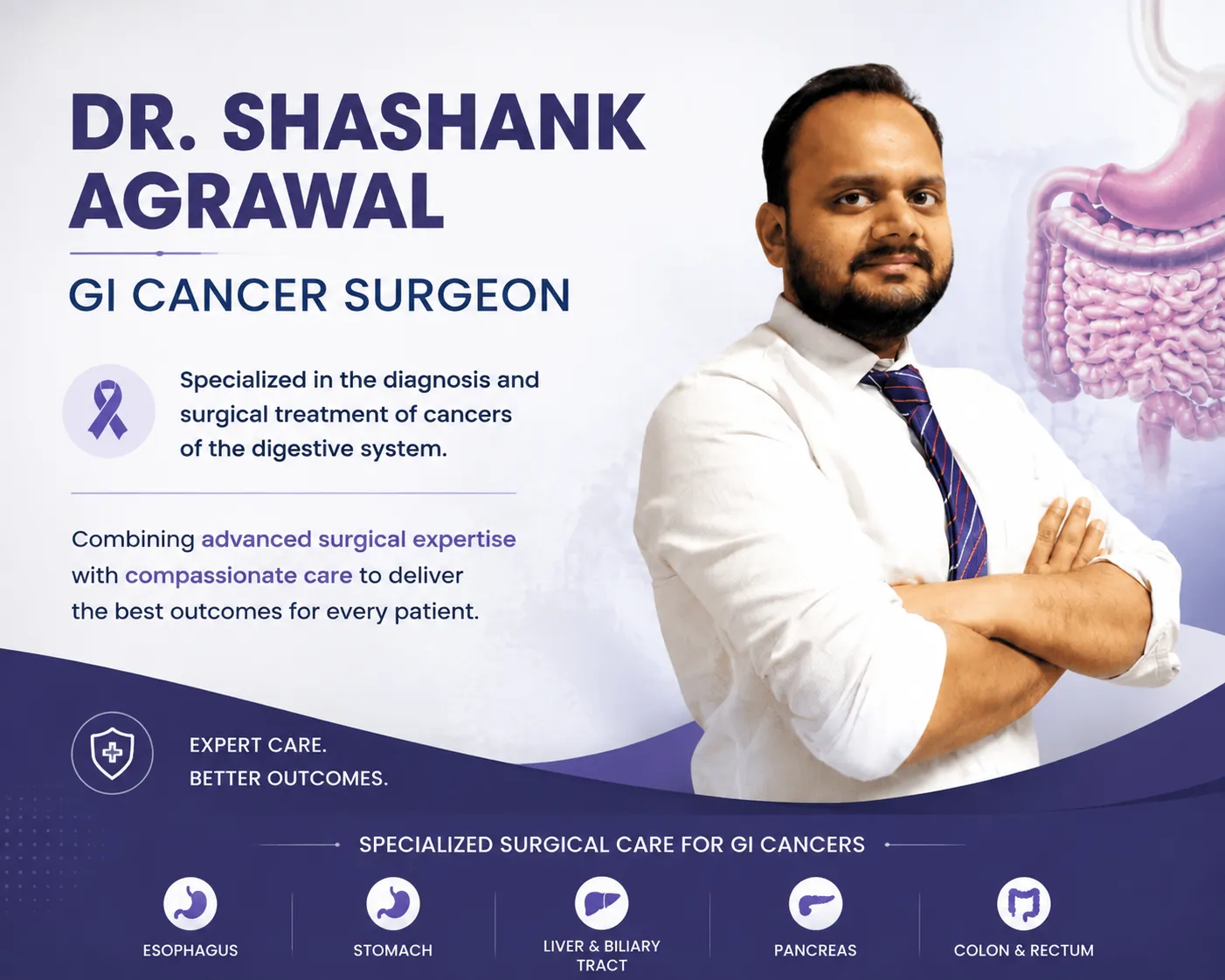
Expertise in Gastrointestinal Cancer Management : A highly regarded GI Cancer Surgeon in Ghaziabad, specialising in cancers of the stomach, colon, rectum, liver, pancreas, and biliary system.
Experience Across Multiple GI Cancers : Manages a wide range of gastrointestinal cancers including gastric, colorectal, pancreatic, liver, and gallbladder cancers.
Speak with a specialist to understand the best approach for your GI cancer care.
Frequently Asked Questions
Which GI cancers can be treated with surgery?
Many GI cancers, including stomach, colon, rectal, liver, gallbladder, and pancreatic cancers, may be treated with surgery depending on the stage.
Is GI cancer always treated with surgery?
No. It depends on the cancer type, stage, and overall health — some patients need chemotherapy, radiation, or a combined approach instead.
Is laparoscopic cancer surgery better than open surgery?
Laparoscopic surgery may offer faster recovery in suitable cases, but which approach is best really comes down to the cancer’s complexity and what’s safest.
How is GI cancer diagnosed and staged?
Diagnosis may include endoscopy, colonoscopy, imaging scans, biopsy, and other tests to determine cancer stage.
How long does recovery after GI cancer surgery take?
It varies, depends on the type of surgery and the patient’s health. Follow-up care plays an important role in proper healing.
How much does GI cancer surgery cost in Ghaziabad?
The cost depends on the cancer type, surgical procedure, hospital care, and additional treatments required.
Disclaimer: The information shared in this content is for educational purposes and not for promotional use.