
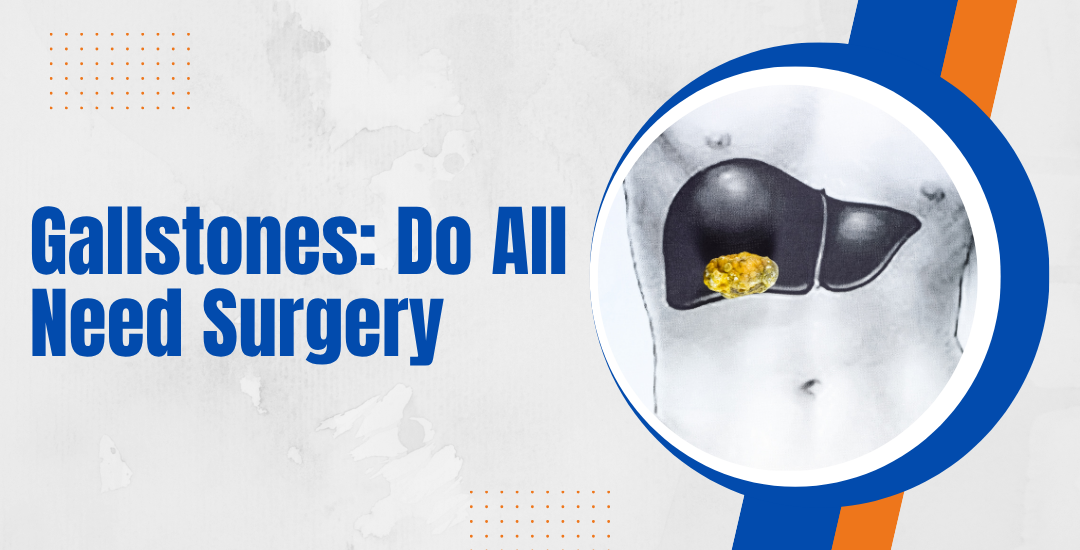
No, not all gallstones need surgery. Most incidentally discovered gallstones found during a routine scan for something else cause zero symptoms and don’t require any intervention. Surgery becomes necessary when stones trigger biliary colic, acute cholecystitis, obstructive jaundice, or gallstone pancreatitis. Silent stones are monitored; symptomatic ones are treated. The distinction isn’t based on stone size alone it’s based on what the stones are actually doing to the patient.
According to Dr. Shashank Agrawal, gallbladder surgeon in Ghaziabad, “Patients are often surprised that a stone found incidentally doesn’t need immediate surgery but when biliary colic or cholecystitis develops, we don’t wait.”
When Do Gallstones Actually Need Surgery?
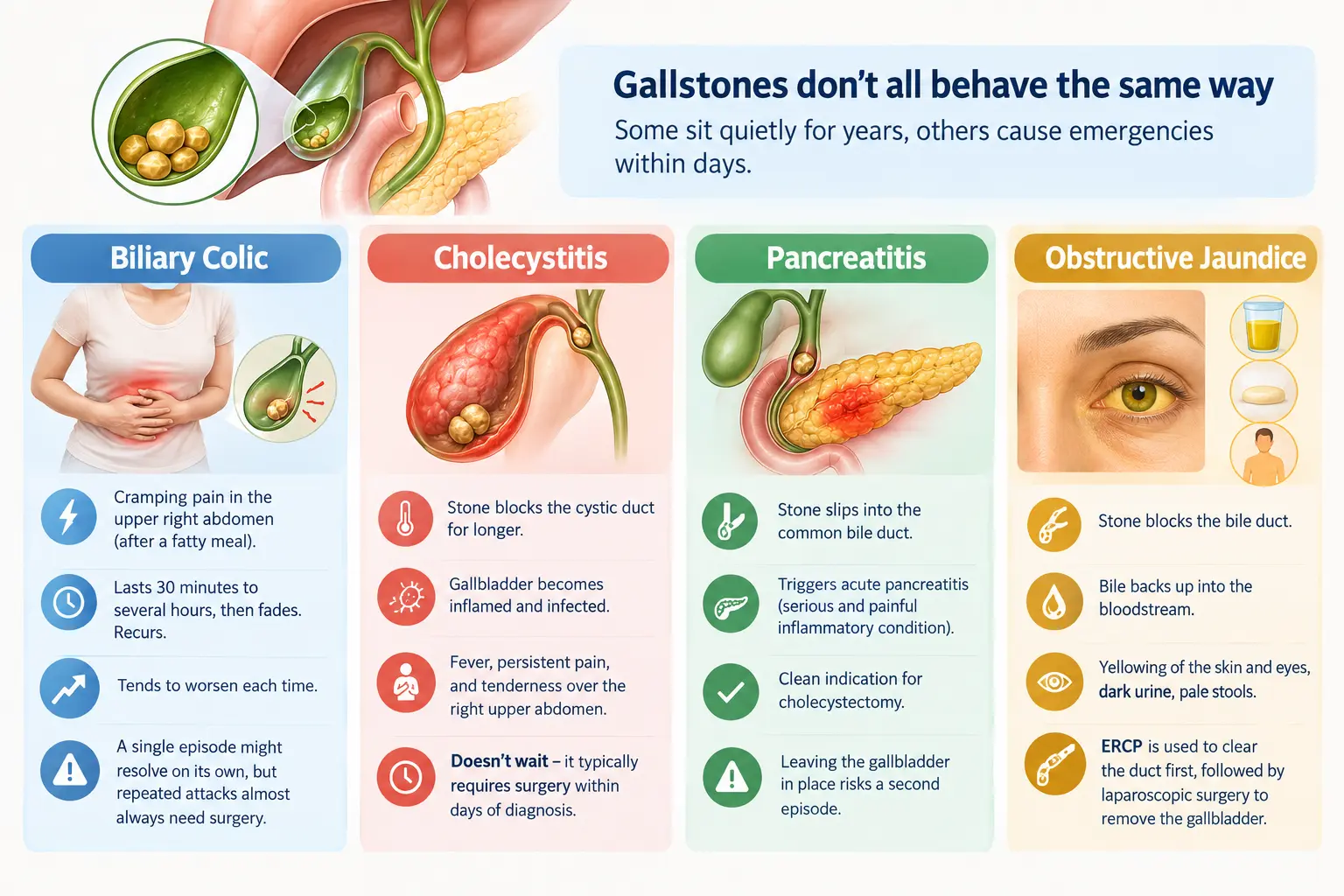
Symptomatic gallstone disease doesn’t resolve on its own the pattern almost always progresses without definitive treatment. Gall bladder cholelithiasis treatment addresses the full spectrum, from surveillance to minimally invasive removal.
What Happens During Laparoscopic Cholecystectomy?
Laparoscopic cholecystectomy is the standard treatment for symptomatic gallstones performed through four small ports rather than a large incision.
The Procedure: A camera and instruments are inserted through small abdominal ports. The gallbladder is dissected from the liver bed, the cystic duct and artery are clipped and divided, and the organ is removed. Most cases are completed in under an hour.
Recovery: Same-day or next-morning discharge in most cases. Desk work resumes around a week; physical labour in three to four weeks. No long-term dietary restriction after healing bile drains directly into the small intestine rather than being stored.
When Open Surgery Is Needed: Dense adhesions, severe cholecystitis with gangrenous changes, or unclear intraoperative anatomy can prompt conversion to open surgery. This is a clinical judgment call, not a complication.
Risks: Bile duct injury is the most serious risk, though rare with an experienced GI surgeon. Others include wound infection, bleeding, and post-operative nausea. In symptomatic patients, the risk of leaving the condition untreated far outweighs surgical risk.
Laparoscopic cholecystectomy carries one of the strongest safety profiles of any abdominal surgery when performed by a trained GI surgeon.
Experiencing upper right abdominal pain after meals?
Why Choose Dr. Shashank Agrawal?
Dr. Shashank Agrawal holds an MBBS, MS in General Surgery, and DNB in Surgical Gastroenterology, along with dual Fellowships in Advanced Hernia Surgery and Advanced Colorectal Surgery (FALS). With over 10 years of focused experience in laparoscopic and robotic GI surgery, Dr. Shashank Agrawal has managed hundreds of gallstone cases from straightforward elective cholecystectomies to complicated acute cholecystitis requiring urgent intervention.
Patients consistently report clear pre-operative counselling, short hospital stays, and smooth recoveries. He doesn’t push surgery on asymptomatic patients, and he doesn’t delay it when the clinical picture demands action.
Frequently Asked Questions
Can a gallstone dissolve on its own without surgery?
Cholesterol stones may partially dissolve with medication, but recurrence is common and it takes months.
Is laparoscopic gallbladder surgery safe for elderly patients?
Yes, with proper pre-operative evaluation, laparoscopic cholecystectomy is safe across most age groups.
How soon after cholecystitis diagnosis should surgery happen?
Most surgeons recommend operating within 72 hours of symptom onset when feasible.
Does removing the gallbladder affect digestion permanently?
Mild bloating after fatty meals can occur initially, but most patients adapt within a few weeks.
